
Entrepreneurship: From Ambition to Purpose
First written in June 2026 and revised on 2026-08-31 for evidence levels, privacy, and affiliation disclosure. This personal review offers no success formula, investment advice, or route for others to copy.
When I was younger, entrepreneurship meant opportunity, ambition, and a chance to take my life off its old track. Today it feels more like a delayed mirror. Courage and greed appear in the same reflection; ability and immaturity grow larger together.
People first found me through this English-learning repository. Others later read about the software company that failed, the health problems that followed, my return home, and the effort to begin again. Connected together, those events ask one question:
How many times must a person break before understanding where their abilities should be used?
Separate Memory, Review, and Plans
This chapter contains personal memory, explanations made in hindsight, and plans for the future. They have different evidence standards:
| Level | How it is written | How a reader should use it |
|---|---|---|
| What happened | Dates, roles, products, accounts, or public records | Treat it as my record and return to primary evidence when needed |
| Hindsight explanation | Why I think a decision worked or failed | Treat it as a hypothesis, not proof of causation |
| Reusable gate | What I will ask, test, or stop next time | Use it to design your own checks, not to copy my route |
| Unverified plan | An industry, service, or public-interest direction I want to explore | Keep it labelled as a direction until users, costs, and time answer |
Loss figures are estimates from personal records and require financial evidence for formal conclusions. For current affiliations and commercial relationships, use the latest Author Projects and Real-world Practice disclosure.

2016: Putting Work into the Market

I went to Beijing on 7 March 2015 to find an internship. A series of encouraging interviews gave me a young person's illusion that I might force a place for myself in the world.
The university required me to return for my graduation defence. I did not receive my certificate on schedule because of unfinished internship requirements, so I went home. The period did not feel impressive: I learned to cook and developed joint pain. In retrospect, major turns often grow through the gap created by having nowhere obvious to go; their beginnings are rarely well lit.
In 2016 I built a film website, bt0.com. It was small, but it had real users and real feedback. That was enough to teach an important lesson: code has to leave the editor, and a product has to leave the maker's imagination and meet another person's choice.
I took web-design projects and formed early companies with a former classmate. I moved quickly and easily mistook speed for direction. In an old post I had written that I wanted to work steadily, avoid rushing, and boast less. It took years to understand my own sentence.
2017: Joining a Company and Betting on It
On 1 April 2017, I joined a Nanjing technology company as a front-end developer to work on software for lawyers and law firms.
The first version had been outsourced. The code lacked comments, project management was confused, and product direction often changed by impulse. In my first month, one timeline module went through more than twenty versions. I did not yet know the terms organisational capability or requirements governance. I knew only that repeated demolition can turn enthusiasm into numbness.
I later led a front-end rewrite in Vue. After more than half a year, the new release reached the market, and for a long time produced no orders. Compensation stagnated and colleagues left. I continued because I believed in the product, moving from employee to team lead, general manager, and partner.
There is much I still value: I worked seriously on a product, led people seriously, and sincerely believed the work could succeed. But I also confused persistence with correctness, investment with a moat, and effort with a claim on the market.
Entrepreneurship permits sincerity and hard work. It never promises compensation for either.
Restaurants, Hotels, and Cash Flow
Outside software, I took part in a resort hotel and a club and lost heavily. Small restaurants taught me more directly.
A relative ran a successful beef-soup shop. I studied it, opened one of my own, then designed, renovated, photographed products, and expanded to more locations. Restaurant work was exhausting but honest. Customers, table turnover, serving time, consistency, reviews, rent, labour, and cash flow answered every day. The numbers could not hide behind a narrative.
The software company taught me that dreams are expensive. Restaurants taught me that cash flow is real.
The shops helped fund my later software investment, but eventually closed during the pandemic period. They offered no verdict that physical business was superior to the internet. Every business returns to exchange: will people pay, can the cost structure survive, and can the organisation remain alive when conditions change?
2022: Seeing the Foundation of Product and Responsibility

The software company moved into a larger office and invested in hiring, welfare, and environment. At the beginning of 2022, sales fell sharply. The product had accumulated features and defects, and customer feedback was poor.
An experienced engineer joined and helped expose deeper problems: old project structure, performance and security risk, and AI/data claims without the training data and foundations we had imagined. Much of what looked like core capability was search and preset output.
We had invested in interfaces, platforms, and feature volume without securing the core data and engineering foundation. Continuing to add features felt like painting a dangerous building; rebuilding required money the company could not afford.
One evening, the partners talked late into the night. A major shareholder who had invested heavily was close to emotional collapse and demanded to know whether the project could continue. I understood the despair. The money was personal savings, not abstract investment capital. I had also invested millions.
The company struggled to pay salaries and borrowed money. Management became more controlling: attendance enforcement, reduced benefits, meaningless overtime, constant reports, and monitoring. By September the team no longer wanted to come to work, and the company ended.
According to the records I had at the time, our combined losses exceeded twenty million yuan before other ventures. This estimate requires financial evidence for any formal conclusion. Harder than the number was guilt towards colleagues, family, and people who had trusted my judgment. Beyond the balance sheet came the discovery that something once held with certainty had been wrong at the foundation.
2023: Survive Before Restarting

At the end of March 2023 I transferred the final restaurant. In June I left Nanjing with family and returned home.
My health and routine had deteriorated: stomach problems, insomnia, poor appetite, blurred vision, and pain. Medical examinations did not reveal the catastrophic illness I feared, yet every day felt dangerous. I escaped into games, reversed day and night, stopped earning, left online groups, and disconnected from GitHub and people I had known.
Lack of money was hard. The absence of visible hope was harder. I repeatedly asked whether stopping earlier or recognising the foundations more clearly would have changed the outcome.
Recovery came through slowly regaining control: eating, sleeping, going outside, learning again, facing the past, admitting mistakes, and sorting the wreckage. No inspiring sentence could perform those acts for me.
Founders often romanticise “starting again”. It may begin with admitting that a founder is an ordinary person who can fail, needs rest, and must first support health and daily life. Another company can wait.
2026: AI and the Physical Economy
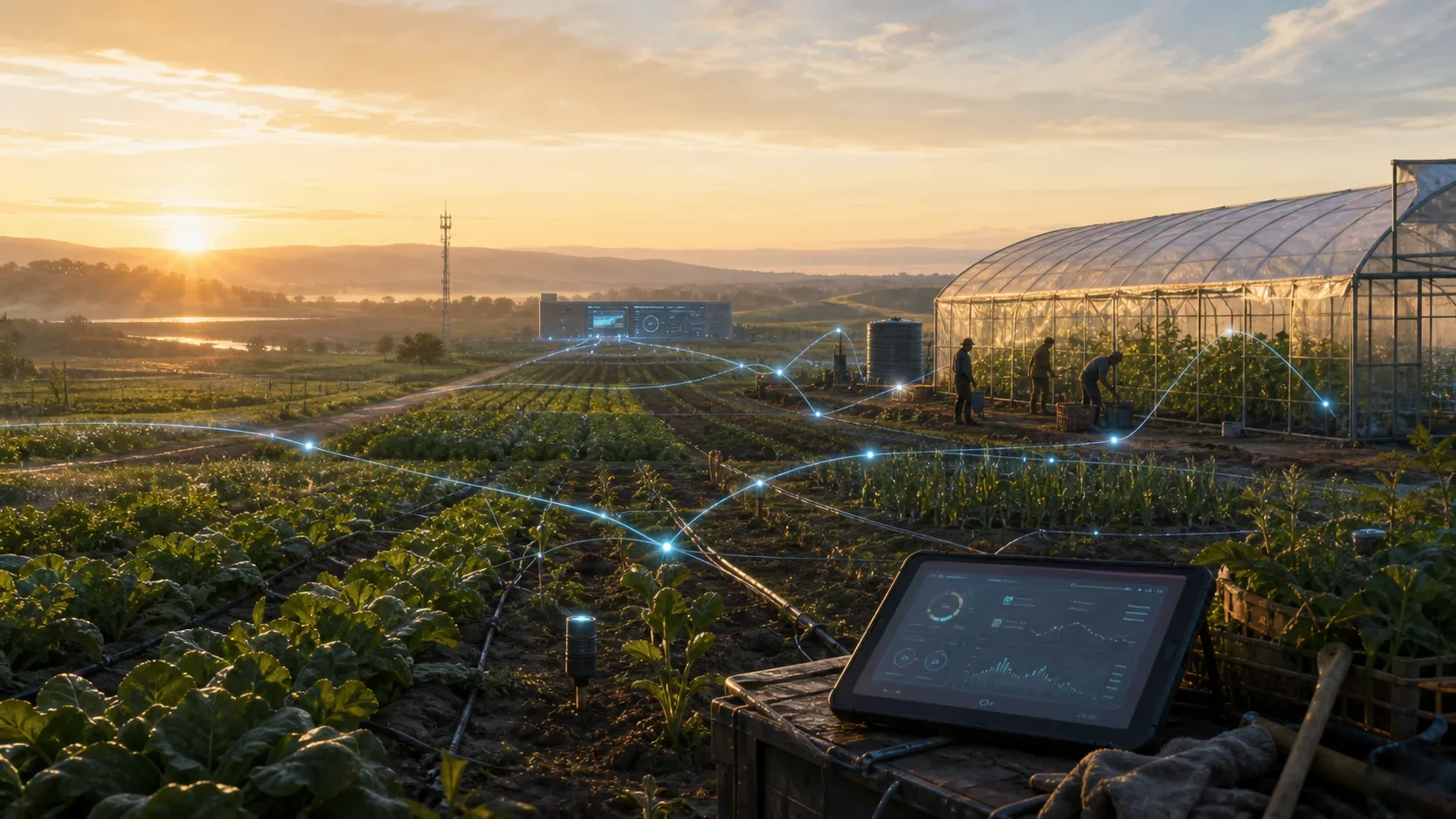
By June 2026, I had returned to technology, products, and industry as a company leader. Product details, company visits, relationships, dates, and non-sponsorship disclosures are now centralised on Author Projects and Real-world Practice so that a personal review does not double as product promotion.
An industry visit reinforced a direction: AI has to leave abstraction and the hands of a small group, enter real processes such as agriculture, and become usable by ordinary people before its value can be tested.
That statement is still a direction, not evidence of impact. After the software failure, I ask harder questions: who needs this, can it enter a real workflow, can people keep using it, and can delivery, compliance, cost, and service close the loop? Without answers, a beautiful technology story can become another unstable building.
Five Reality Gates for the Next Venture
Each gate should leave evidence another person can inspect. A founder's confidence is only a starting point:
- Problem gate: who meets the problem, in which repeated situation, and what interviews, orders, or usage records exist?
- Value gate: what time, risk, or cost changes, and how will the user accept the result?
- Delivery gate: who implements, supports, trains, and handles incidents, and can someone else take over?
- Survival gate: are revenue, fixed cost, variable cost, worst case, and stop/exit conditions in the ledger?
- Relationship gate: what cost do team, family, customers, and third parties bear, and are permission, privacy, and promises clear?
Use the Life Practice Toolkit for choices and boundaries, and the AI Project Scorecard for pilot quality. Tools can expose questions; they cannot carry entrepreneurial responsibility.
Lessons That Remained
Features do not make a product
Features acquire the weight of a product only when people repeatedly use them to solve a problem more quickly, reliably, or affordably.
Technical debt becomes business debt
Confused code, old architecture, missing data, and security risk eventually consume delivery, slow iteration, raise maintenance cost, and damage sales, support, and morale.
Cash flow is more honest than valuation
A small business that survives can carry more weight than a grand internet narrative. Cash flow makes a business answer to reality.
Founders should distrust heroic stories
“One more push will work”, “we invested too much to be wrong”, and “everyone following me will have a future” can become harm when facts no longer support them.
The willingness to learn after failure is an asset
I once closed the connection to GitHub and technology. The pain remains. I returned because it needed to become judgment; otherwise failure would remain only failure.
Entrepreneurship Cannot Depend on Self-immolation
I once thought a founder should burn time, health, relationships, and savings, and that success would justify it. I eventually abandoned that belief.
Good entrepreneurship should make a founder clearer, a team more orderly, users better served, and family more secure. Risk still needs limits; persistence still needs an exit; belief in the future must keep looking at the present.
Before continuing, I now want plain answers:
- Who needs this and why now?
- Where does revenue come from and where are the costs?
- What guarantees delivery?
- How is risk contained?
- If it fails, how can people exit responsibly?
- If it succeeds, can ordinary people benefit?
This review neither displays youthful success nor prosecutes later disappointment. It records an attempt to rebuild judgment after reality broke it and use what remains for work that helps others.
Related Reading
- Archive from a Decade Ago
- Last Year and Now
- My Story
- Author Projects and Real-world Practice
- Life Practice Toolkit
- AI Project Scorecard
- GitHub profile
Closing: Let Ambition Pass Through Reality
I do not want to lose ambition. Without it, I would not have entered unfamiliar industries or returned to technology after failure. But ambition left untested can recruit everything nearby: a team's time, a family's sense of safety, a customer's trust, and the rest a body was meant to receive.
If there is another venture, I want it to pass through plain realities: the problem exists, users choose the work, the ledger closes, promises can be delivered, and someone knows how to stop when it fails. It may grow more slowly and remain smaller, while leaving the people inside it more ordered instead of merely making the founder's story more dramatic.
I no longer need a company to prove that I stood up after a low season. Work worth doing should remain useful after I leave the stage. Even if it never becomes a grand enterprise, it should not require the people who love me to keep paying for my certainty.